
Pennsylvania Right-to-Know Law
Pennsylvania's open-records law is the Right-to-Know Law, often shortened to the RTKL. It sits in the statute books at 65 P.S. §§ 67.101 through 67.3104. The law gives citizens access to the records that public agencies hold. It sets deadlines for an agency to respond, spells out which records stay closed, and gives a person a path to appeal a denial. The state's Office of Open Records helps with those appeals and publishes guidance for the public.
The starting point for most people is simple. Anyone may ask. You do not have to say why you want a record, and you do not have to be a resident of the county or the state. A public record, under the law, is a record that an agency creates or keeps in the course of its work, unless a law or rule makes it confidential.
The Office of Open Records lays out the basics of how the law works for both citizens and agencies.
You can read the state's plain overview of the law on the Right-to-Know Law overview page, which walks through the request process and the rights it gives.
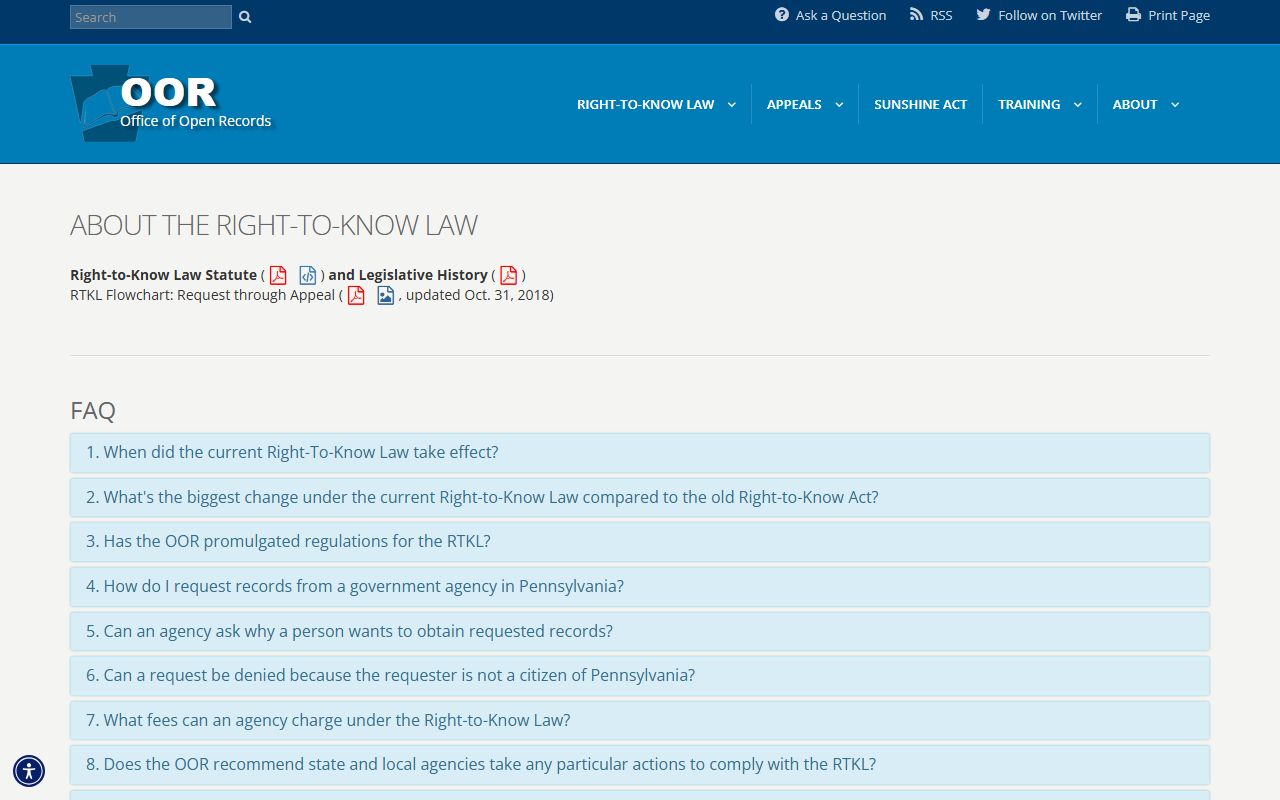
That overview is the same framework every Bucks County agency uses when it answers a request, so it is a good place to learn the terms before you file.
Court Records Follow a Different Path
Court case records are not the same as ordinary agency records. Courts are still subject to the Right-to-Know Law, but most court files do not reach the public through a plain open-records request. Instead they come through online portals or through fee structures set by court rule. The rule is the Case Records Public Access Policy, found at 204 Pa. Code § 213.81. It governs how case records get released and what they cost.
Bucks County spells out where each kind of record lives. Civil case information comes from the Prothonotary. Criminal case information comes from the Clerk of Courts. Probate and estate files come from the Register of Wills. Minor-court matters, such as traffic and small claims, come from the Magisterial District Courts. Administrative court records that are not available through those case channels go to the relevant Court Open Records Officer, while ordinary agency records go to the agency open records officer.
You can read the county's own guidance on the Court Records page and its Courts Right-to-Know page. For full case file help, see the court records page.
Note: A Right-to-Know request to a county agency will not pull a court docket, so route case requests to the proper clerk or portal.
What Records the County Maintains
Bucks County keeps far more than court files. Several offices each hold their own set of records, and most are open to the public. Property records and deeds sit with the Recorder of Deeds. Estate and probate records sit with the Register of Wills. Civil and family records sit with the Prothonotary, and criminal records sit with the Clerk of Courts. Vital records split between the county and the state.
The main record groups the county holds break down like this.
- Deeds and property records: kept by the Recorder of Deeds, with set copy and certification fees.
- Estate and probate records: wills, estate files, and short certificates from the Register of Wills.
- Civil and family records: complaints, judgments, liens, and family matters held by the Prothonotary.
- Criminal records: charges, dispositions, and sentencing kept by the Clerk of Courts.
- Marriage records: kept by the county Register of Wills, which issues licenses.
Birth and death records are a special case. They are not held by the county at all. Those come from the Pennsylvania Department of Health, which keeps the state's vital records. Marriage records, though, stay local with the Register of Wills, and probate and estate files run through the Orphans' Court side of that same office.
How to File a Public Records Request in Bucks County
Filing a Right-to-Know request is not hard, but a few steps keep it on track. The law wants the request in writing, sent to the right office, with a clear description of what you want. A vague request slows things down. The more exact you are, the faster an open records officer can find the file. The Office of Open Records publishes a standard form that works for any agency in the state.
- Identify the agency that holds the record you want. Property, estate, civil, and criminal files each sit with a different county office.
- Put the request in writing. The Office of Open Records publishes a standard request form you can use.
- Describe the records clearly. Name the type of record, the parties, and a date range when you can.
- Send the request to the agency's Open Records Officer by the method that office accepts.
- Wait for the response within the deadline the law sets, and watch for any extension notice.
- If access is denied, appeal to the Pennsylvania Office of Open Records.
The state keeps its forms in one place so you do not have to draft a request from scratch.
You can download the standard request form from the Office of Open Records forms page, which also lists the official appeal form.
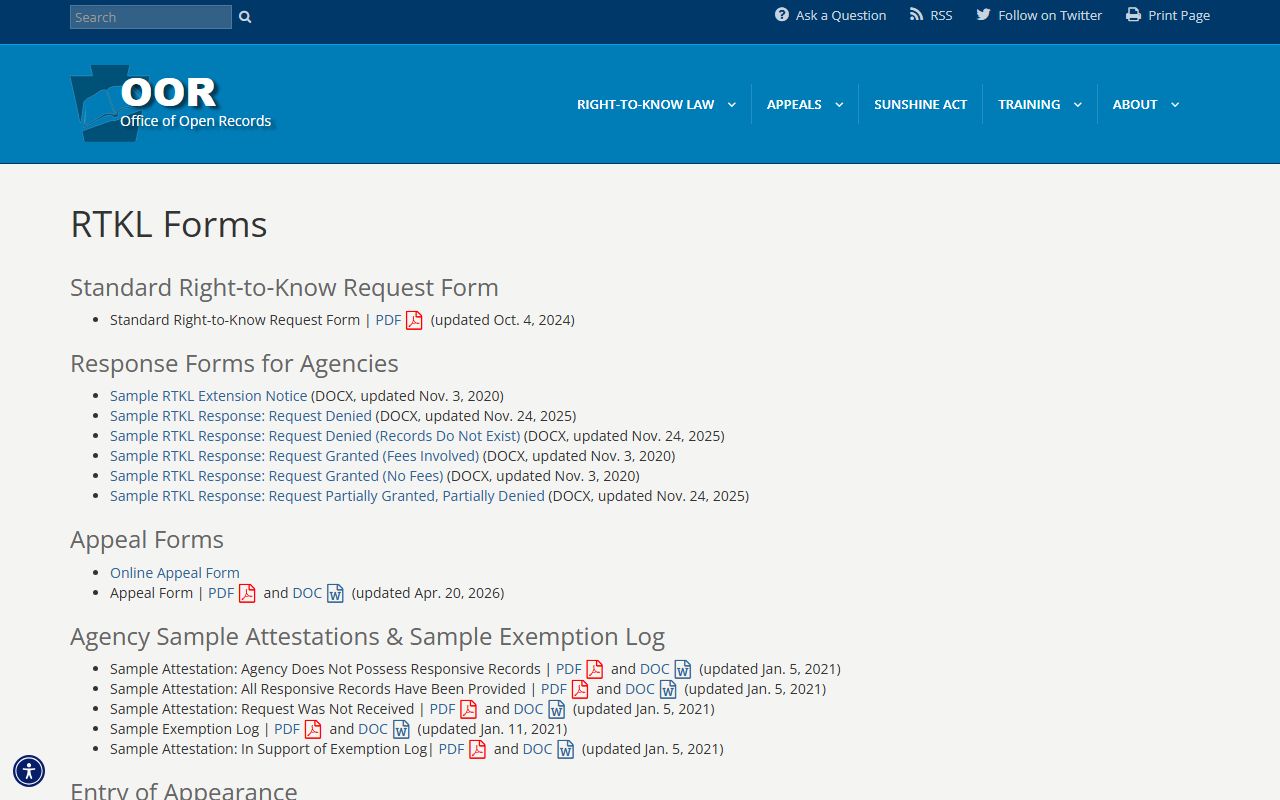
Using the state form helps because it already lines up with the fields a Bucks County open records officer expects to see.
Public Records Request Form Fields
A good request gives the office enough to work with on the first pass. The standard form asks for who you are, what you want, and how you want to get it. None of it is hard to fill in, but each field has a purpose. The description field matters most, since a clear one cuts down on back-and-forth and helps the office find the record faster.
| Field | Notes |
|---|---|
| Requester Name and Contact Info | Your name plus an address, email, or phone so the office can reply. |
| Agency Name | The county office or agency you believe holds the record. |
| Description of Records | A clear, specific account of the records you want; name parties and dates when you can. |
| Date of Request | The day you submit, which starts the response clock. |
| Preferred Format | Whether you want to inspect the records or receive copies. |
| Delivery Method | How you want the records sent, such as mail, email, or pickup. |
Keep your description tight but complete. A request for "all emails" is too broad, while a request for emails between two named staff over a set month is much easier to fill. If you only want to look, not own copies, say so in the format field. That can lower or remove a fee.
Response Timelines
The Right-to-Know Law sets a deadline for an agency to respond to a written request. In some cases the law lets the agency invoke an extension before the first deadline runs. An extension might apply when the records need legal review, sit in storage, or take real work to gather. The agency must tell you when it uses one.
An agency can grant the request, deny it, or grant part and deny part. If the agency denies access or does not respond at all, you are not stuck. The law treats a failure to respond as a denial, which opens the door to an appeal. That appeal goes to the Pennsylvania Office of Open Records, which decides the matter.
Note: Watch the dates on every notice, since a missed response can be treated as a denial that you may appeal.
Public Records Fees in Bucks County
Records are public, but copies are not always free. Fees depend on which office holds the record and what you ask for. Right-to-Know copies follow the fee schedule set by the Office of Open Records, which uses a per-page rate. County offices that hold their own records, such as the Recorder of Deeds, charge their own set fees. Court-record copies follow each court office's fee bill.
| Item | Amount |
|---|---|
| Right-to-Know copies | Per-page rate set by the Office of Open Records fee schedule |
| Recorder of Deeds copy | $1 per page |
| Recorder of Deeds certification | Additional $1.50 |
| Recorder of Deeds plans | $5 per sheet |
| Court-record copies | Set by each court office's fee bill |
If you plan to inspect records rather than take copies, you may avoid a copy fee. When you do need copies, ask the office for a fee estimate before they start, especially on a large request. A certified copy costs more than a plain one, since the certification adds a charge on top of the per-page rate.
Records That Are Exempt
Not every record is open. Some are sealed by court rule, and some are closed by statute. The Case Records Public Access Policy strips personal identifiers from public court files, so things like Social Security numbers, financial account numbers, and driver license numbers do not appear. Other whole categories of records are confidential under their own laws. The Right-to-Know Law also lists its own exemptions, such as records tied to personal security or to an open criminal investigation.
The most common closed categories include the following.
- Personal identifiers under the court access policy, such as Social Security, financial account, and driver license numbers.
- Juvenile court files limited by 42 Pa.C.S. § 6307.
- Mental-health treatment records protected under the Mental Health Procedures Act, § 111.
- Adoption records closed under 23 Pa.C.S. Chapter 29.
- RTKL statutory exemptions, including records tied to personal security or criminal investigations.
Juvenile files are tightly held. The law limits who may see them to a short list of parties and agencies.
You can read the juvenile file rule on the state legislature site at 42 Pa.C.S. § 6307, which sets out who may inspect a juvenile court file.
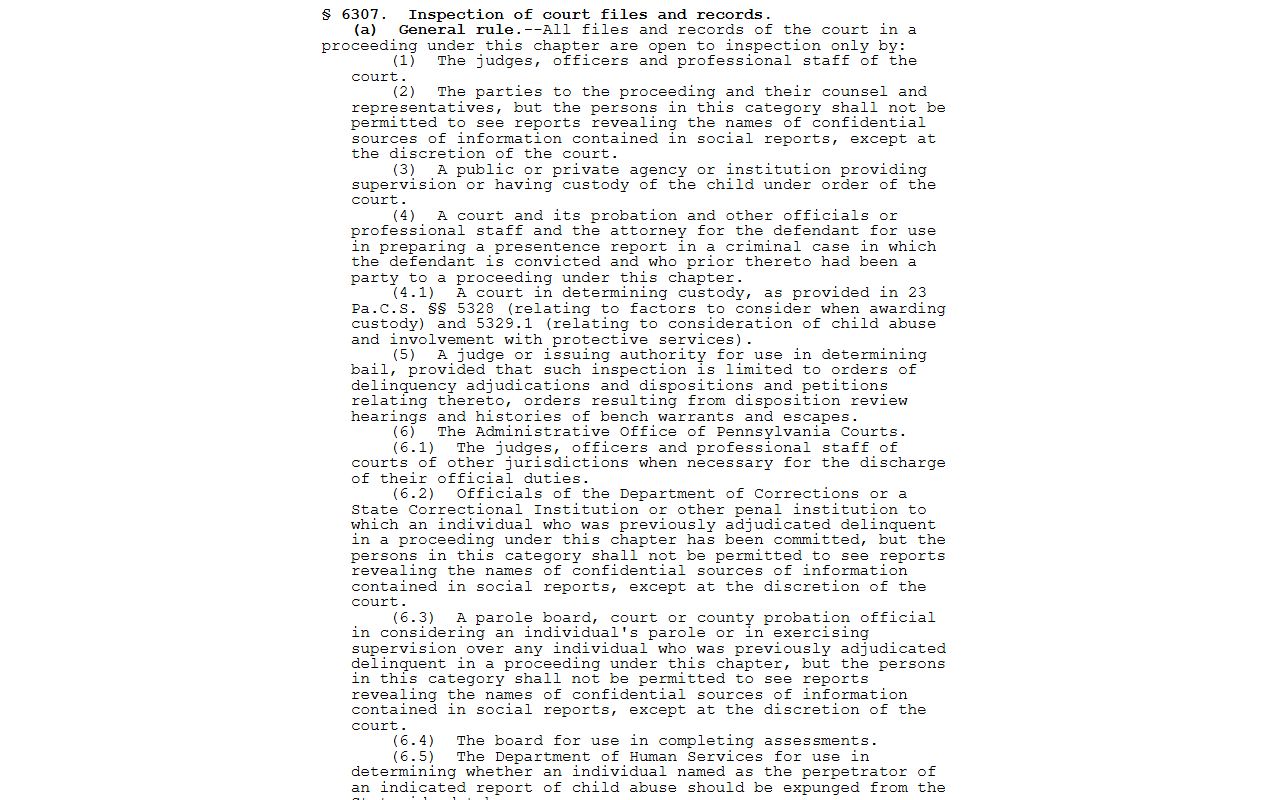
Because that statute names a fixed group of people who may view the file, most members of the public cannot get a juvenile record at all.
Health and family records carry their own shields. Mental-health treatment records are confidential under the Mental Health Procedures Act, and the law keeps them out of public view in most cases.
The text of that confidentiality rule is posted on the state legislature site at the Mental Health Procedures Act § 111.
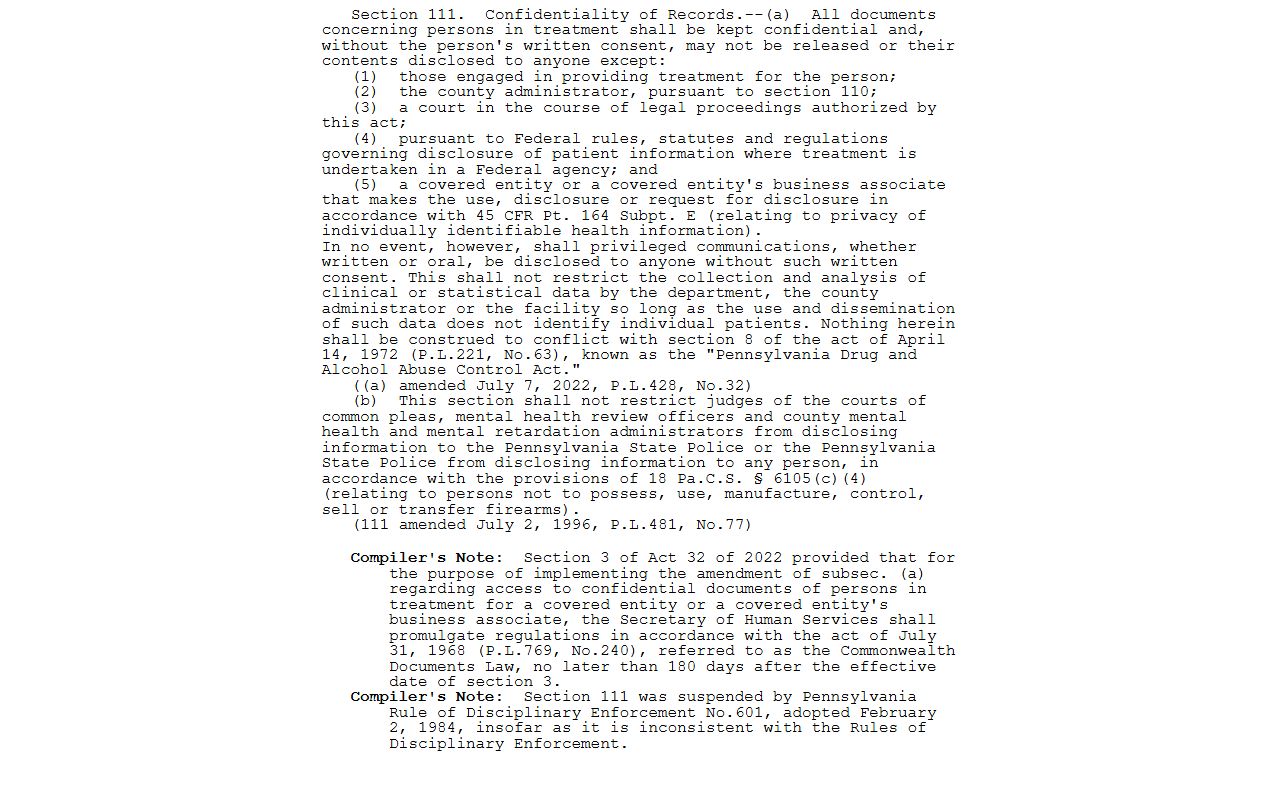
That section is why a Bucks County mental-health treatment file stays closed even when a related court case is open.
Adoption records are sealed as well. They are governed by their own chapter of the consolidated statutes, which sets narrow rules for access.
The provisions sit at 23 Pa.C.S. Chapter 29 on the state legislature site, which lays out the adoption record access rules.
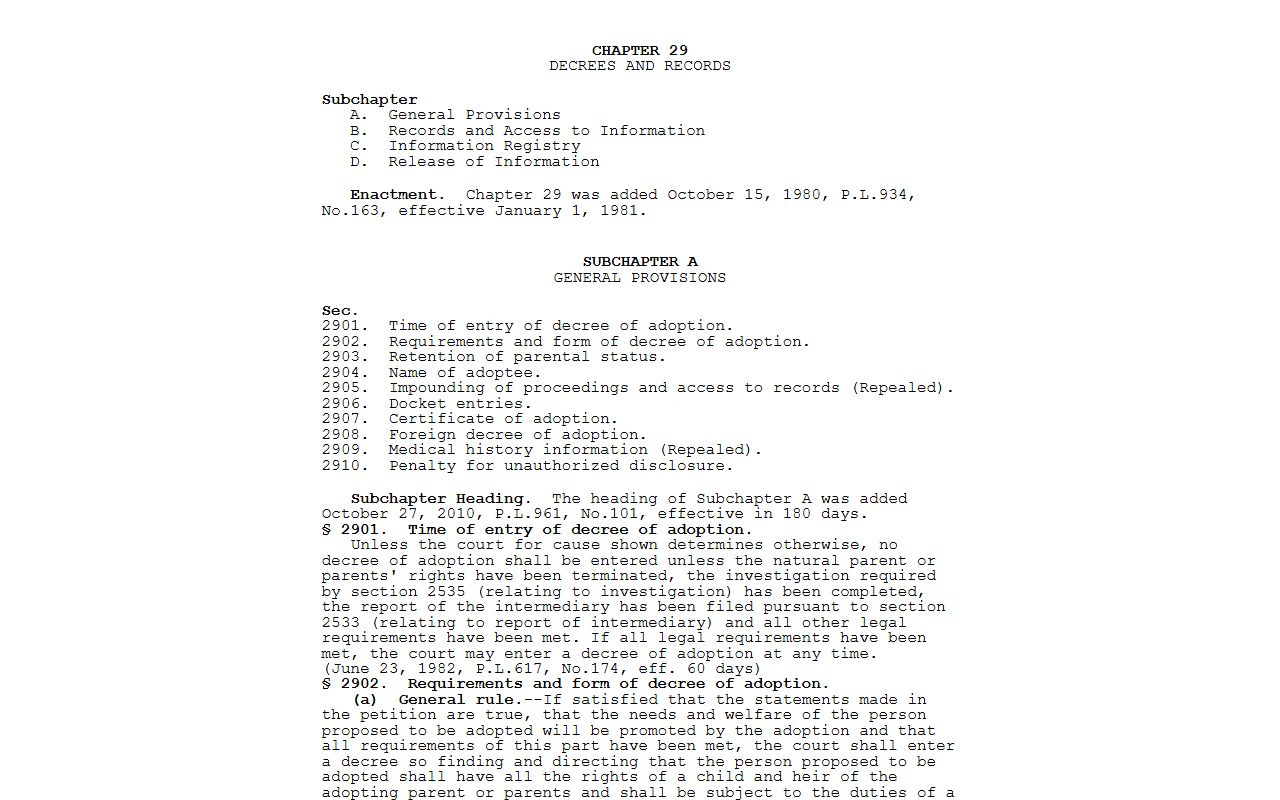
Under that chapter, adoption files in Bucks County are released only in the limited ways the law allows.
If Your Request Is Denied
A denial is not the end of the road. If a Bucks County agency denies your request, or fails to respond in time, you can appeal. The appeal goes to the Pennsylvania Office of Open Records, the state body that decides Right-to-Know appeals. The office reviews the agency's reasons and the records at issue, then issues a decision.
Keep your paperwork. Save the original request, the agency's response or the lack of one, and any fee notices. Those documents form the base of an appeal. The Office of Open Records publishes an appeal form alongside the request forms, so you can file with the same set of tools you used at the start.